Smoke and carbon monoxide alarm rules in Washington:
for owners, sellers, landlords and remodels
ARE SMOKE AND CARBON MONOXIDE ALARMS REQUIRED IN WASHINGTON?
State law requires smoke detectors in rentals, in homes built after 1980, and in any home sold on or after July 1, 2019; the seller must install one before the buyer moves in. Carbon monoxide alarms are required in residential buildings, but owner-occupied single-family homes lived in before July 26, 2009 are exempt until they're sold. Remodeling with a permit also triggers both: the building code says the home must then have smoke alarms and CO alarms as required for new homes. Failing to comply can bring a fine of up to $200.
When alarms are required
| Situation | Smoke alarm | Carbon monoxide alarm |
|---|---|---|
| Rental home or apartment | Required; owner installs, tenant maintains | Required; tenant maintains and replaces batteries |
| Home built after 1980 | Required | Required in new homes since 2011 |
| Selling a home | Seller provides at least one before the buyer moves in (sales on or after July 1, 2019) | Seller equips the home before the buyer can legally occupy it |
| Owner-occupied home lived in before July 26, 2009 | Required if built after 1980; otherwise at sale or permitted work | Exempt until sale or permitted interior work |
- Vacant rentals: when a unit becomes vacant, the owner must make sure the smoke detector works before anyone moves in.
- Sales don't fall apart over it: RCW 43.44.110 says a missing detector doesn't void the sale, but the seller still has to provide one.
Remodels with a permit
- Smoke alarms: where alterations, repairs or additions requiring a permit occur, or a bedroom or an accessory dwelling unit is added, the home must have smoke alarms as required for new homes (WAC 51-51-0314).
- CO alarms: the same permitted work triggers an inspection for carbon monoxide alarms (WAC 51-51-0315).
- Exceptions: exterior-only work, such as roofing, siding, windows, doors, porches or decks, and plumbing, electrical or mechanical work alone, don't trigger the smoke alarm rule.
- Battery alarms are allowed in this case: the code says alarms added because of a remodel may be battery powered, and they don't have to be wired to old alarms that aren't interconnected.
Which jobs need a permit: Kent, Auburn and Renton, Bellevue, Kirkland and Redmond, Seattle permit fees.
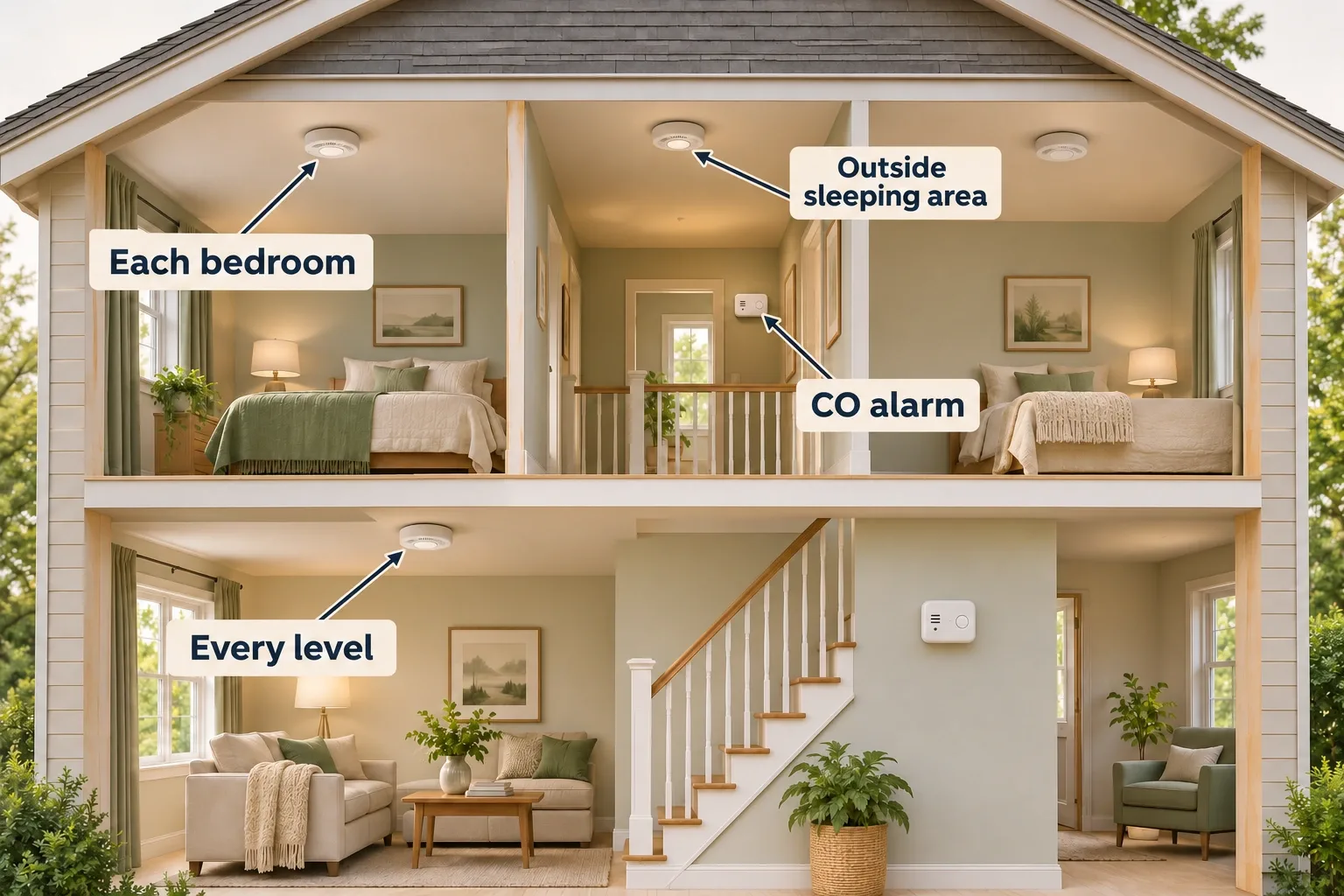
Where to put them
| Alarm | Locations in the code |
|---|---|
| Smoke | In each bedroom; outside each sleeping area, near the bedrooms; on every level, including basements and habitable attics |
| Carbon monoxide | Outside each separate sleeping area, near the bedrooms, on each level, per the manufacturer's instructions |
When more than one smoke alarm is required, the code says one going off should set off all of them; listed wireless alarms that all sound together meet this.
Fines
- Up to $200 for an owner, seller or tenant who fails to comply with the smoke detector law.
- $5,000 for an owner who fails to comply if a fire later damages property or injures or kills a tenant or household member.
Buying a home? See home inspection cost in Washington and radon and mold testing.
Rentals: landlord repair deadlines in Washington.
Frequently asked questions
Are carbon monoxide detectors required in Washington homes?
In residential buildings, yes. Owner-occupied single-family homes lived in before July 26, 2009 are exempt until they're sold or get permitted interior work.
Do I need smoke and CO alarms to sell my house in Washington?
Yes. The seller must provide at least one smoke detector and equip the home with carbon monoxide alarms before the buyer moves in.
Does a remodel require new smoke alarms?
Work that needs a building permit, or adding a bedroom, triggers smoke alarms as for a new home. Exterior-only work and plumbing, electrical or mechanical work alone are exempt.
Who replaces the batteries in a rental?
The tenant. State law makes the tenant responsible for maintaining smoke and carbon monoxide alarms, including batteries.
What is the fine for no smoke detector in Washington?
Up to $200. An owner faces $5,000 if a fire later causes damage, injury or death to a tenant or household member.
Sources
- RCW 43.44.110 — Smoke detection devices in dwelling units
- RCW 19.27.530 — Carbon monoxide alarms
- WAC 51-51-0314 — Smoke alarms (Section R314)
- WAC 51-51-0315 — Carbon monoxide alarms (Section R315)
- Seattle Fire Department — CAM 5121, Carbon monoxide alarm requirements
Sources accessed November 20, 2026.
This guide summarizes state law and code. It is not legal advice. See our disclosure and disclaimer.