Neighbor's tree fell on your house in Washington (2026):
who pays, what insurance covers and what to do first
WHO PAYS IF A NEIGHBOR'S TREE FALLS ON MY HOUSE IN WASHINGTON?
The Washington Insurance Commissioner says your own homeowner insurer will often pay when a neighbor's tree falls on your house, and you pay the deductible. If the neighbor was at fault, your insurer may try to collect from the neighbor's insurer, though fault can be hard to prove. A Clark County guide says courts will likely apply a reasonable-care standard: a neighbor who knew or should have known the tree was a threat could be liable. Standard policies usually don't pay to clean up trees that fell in the yard without hitting a building.
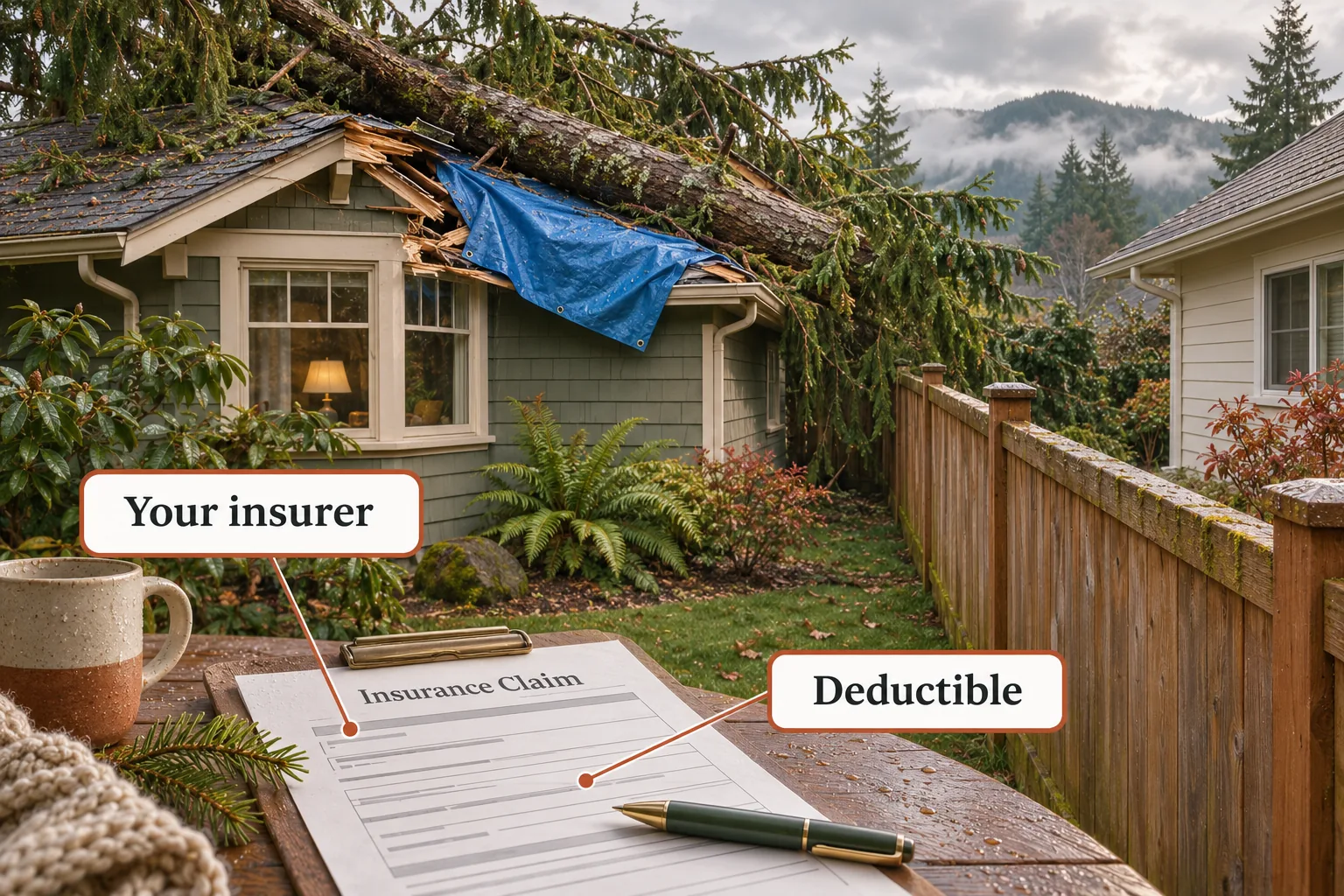
First steps after a tree hits your house
- Get everyone out if the structure is damaged, and call 911 and the utility if power lines are down. HomeAdvisor's checklist puts these first.
- Photograph everything before cleanup: the tree, the roots or break, the damage, and any signs the tree was dead or leaning before the storm.
- Call your insurer and ask what it covers for removal and emergency repairs.
- Cover the roof to stop rain getting in: see roof leak repair cost for emergency tarp prices.
- Hire registered contractors for repairs: how to check a contractor.
Who pays: what the Insurance Commissioner says
| What the tree hit | Who usually pays |
|---|---|
| Your house, garage or other building | Your homeowner insurer, minus your deductible, even if it was the neighbor's tree |
| Your car | Your auto insurer, if you have comprehensive coverage |
| Only your yard | Usually you: standard policies don't cover cleanup unless the tree hit your home, garage, car or similar |
| Neighbor at fault | Your insurer may seek payment from the neighbor's insurer; fault can be hard to prove |
When the neighbor may be liable
A Clark County, Washington guide on tree disputes says courts will likely apply a reasonable-care standard. If the neighbor reasonably maintained the tree and it didn't look like a threat, the neighbor probably isn't liable. If no reasonable person could have prevented the damage, it may be treated as an "act of God." But a neighbor who knew or should have known the tree or limb was a threat could be liable. Records help: an arborist's report or letters about a dead or leaning tree sent before it fell.
If a neighbor's tree looks dangerous now
- Talk to the neighbor first. The same guide says landowners must reasonably inspect and maintain their trees.
- Get an arborist's report, then send it by certified mail to the neighbor and to your homeowner's insurer.
- Trim only to the property line. You may trim branches that cross your line, but you can't enter the neighbor's land without permission or damage the tree.
- Don't cut the tree down yourself. Under RCW 64.12.030, a person who cuts down or injures a tree on another's land without lawful authority can owe triple damages.
- In Seattle, removing a large tree has its own rules: see tree removal cost and rules in Seattle.
What removal costs
Angi puts a typical tree removal at $200 to $2,000, with an average of $750, and says emergency removal after a storm can cost as much as $5,000. Washington sales tax applies to tree removal for homeowners; see tree removal cost in Seattle.
Removing what's left? See tree removal permit rules.
Frequently asked questions
Who pays if a neighbor's tree falls on my house in Washington?
Usually your own homeowner insurer, minus your deductible, according to the Washington Insurance Commissioner. If the neighbor was at fault, your insurer may seek payment from the neighbor's insurer.
Is my neighbor responsible if their dead tree falls on my house?
Possibly. A Clark County guide says a neighbor who knew or should have known a tree was a threat could be liable, while a healthy, maintained tree that fell in a storm usually isn't the neighbor's fault.
Does insurance pay to remove a tree that fell in my yard?
Usually not. The Insurance Commissioner says standard policies don't cover tree removal and cleanup unless the tree fell on your home, garage, car or similar.
Can I cut branches from my neighbor's tree?
You may trim branches that cross onto your property, up to the property line, without entering the neighbor's land or harming the tree. Cutting down or injuring the tree can bring triple damages under RCW 64.12.030.
How much does it cost to remove a fallen tree?
Angi puts tree removal at $200 to $2,000, with an average of $750, and says urgent removal after a storm can cost as much as $5,000.
About these prices. The ranges are published estimates from the sources below, as of the dates shown. Material costs, labor rates, tariffs and inflation can change prices after those dates, and your home may differ. Use them to plan a budget, then get written quotes from licensed contractors.
Sources
- Washington Office of the Insurance Commissioner — Winter weather and insurance coverage
- Clark County, Washington — Tree overhang and neighbor tree guide
- RCW 64.12.030 — Injury to or removing trees, damages
- Angi — How much does tree removal cost?
- HomeAdvisor — Who to hire if a tree falls on your house
Sources accessed November 19, 2026.
This guide summarizes Washington insurance and legal information. It is not legal or insurance advice. For a large loss or a dispute, talk to your insurer or a lawyer. See our disclosure and disclaimer.