Mold removal cost after a flood:
$10–$30 per square foot
HOW MUCH DOES MOLD REMOVAL COST AFTER A FLOOD?
National cost guides put professional mold remediation at $10 to $25 per square foot (Angi and HomeAdvisor) or $15 to $30 (HomeGuide). A 100-square-foot area comes to roughly $1,000 to $3,000; whole-house jobs can reach $10,000 to $30,000 (This Old House). Replacing wet drywall and insulation is extra. The EPA says to dry wet materials within 24 to 48 hours to prevent mold, and the state Department of Health suggests a professional for more than about 10 square feet.
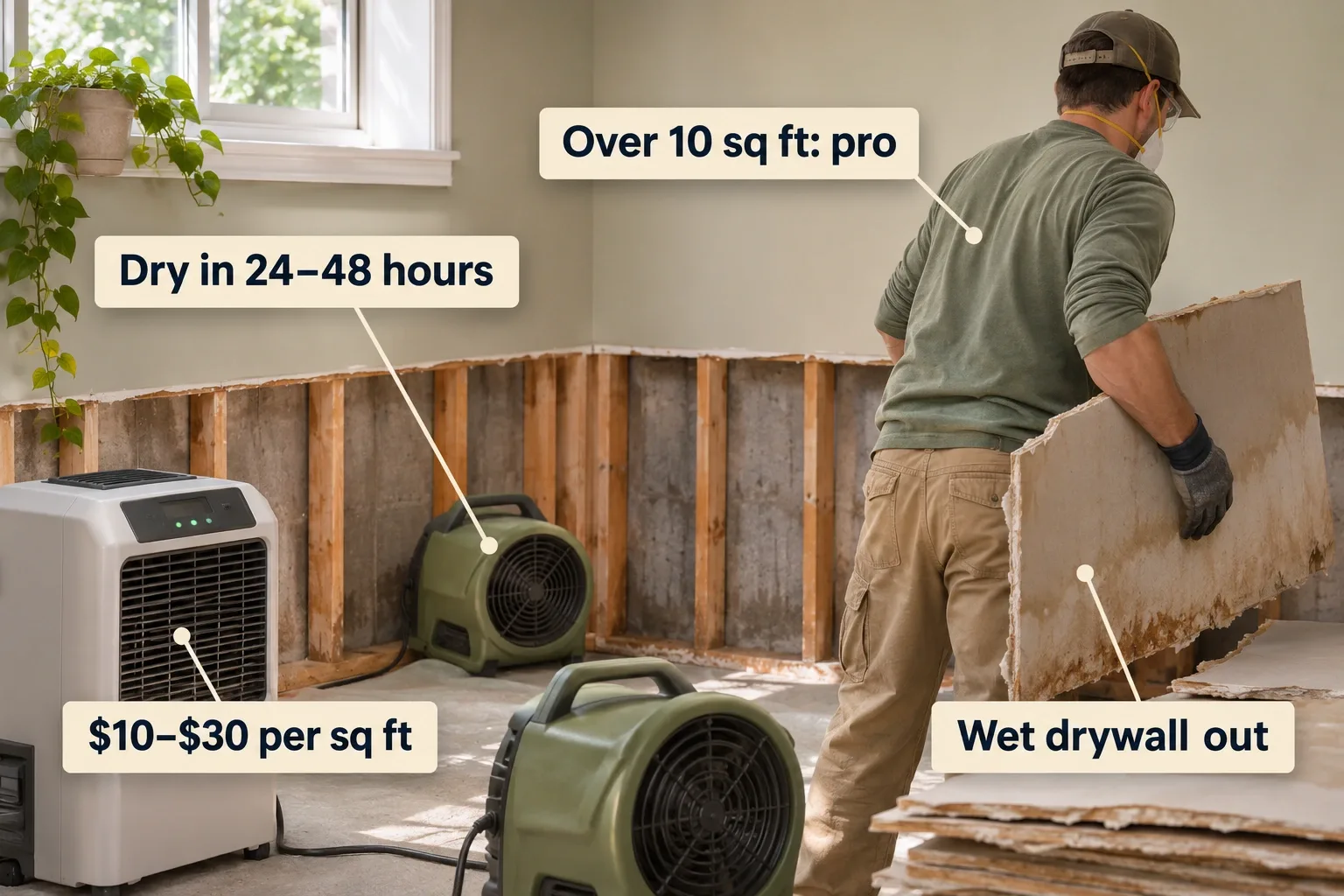
Mold remediation cost by area
| Affected area | Typical cost |
|---|---|
| 50 sq ft | $500–$1,500 |
| 100 sq ft | $1,000–$3,000 |
| 200 sq ft | $2,000–$6,000 |
| 500 sq ft | $5,000–$15,000 |
| 1,000 sq ft | $10,000–$30,000 |
HomeAdvisor reports an average mold job of $2,230. HomeGuide puts most jobs at $1,500 to $6,000. Prices rise when mold is in a crawl space, inside walls, or in water that contained sewage. Washington taxes the labor as well as materials: see sales tax on home repairs.
DIY or hire a pro?
| Mold area | EPA job size | Who should clean it |
|---|---|---|
| Under about 10 sq ft (3 ft × 3 ft) | Small | Often the owner, with gloves, goggles and an N95 mask |
| 10–100 sq ft | Medium | Consider a professional |
| Over 100 sq ft | Large | Professional with containment |
| Any area touched by sewage, or hidden in walls | — | Professional |
Public Health – Seattle & King County warns that mold can grow within 24 to 48 hours after a flood. Open windows, pump out water, and throw away wet drywall and soaked carpet and pad. Full list: flooded house cleanup checklist. Testing first? See mold testing cost.
Repair costs after removal
| Item | Typical cost |
|---|---|
| Drywall replacement | $1.50–$3.50 per sq ft of wall |
| Painting new drywall | $1–$3 per sq ft |
| Crawl space vapor barrier | $2–$4 per sq ft |
A crawl space that stays damp will grow mold again: crawl space encapsulation cost and basement waterproofing cost.
Insurance and mold
- Flood damage needs flood insurance: flood insurance in Washington.
- Many homeowners policies limit or exclude mold. Read the mold section of your policy before you sign a remediation contract.
- King County says to photograph and record damage before cleaning up, repairing or throwing items away.
Before hiring, confirm the company is registered with L&I: how to check a contractor.
Frequently asked questions
How much does mold removal cost after a flood?
National guides list $10 to $25 per square foot (Angi, HomeAdvisor) or $15 to $30 (HomeGuide). A 100-square-foot area is about $1,000 to $3,000.
How fast does mold grow after a flood?
Mold can start within 24 to 48 hours. The EPA says to dry wet materials and items within that time.
Can I remove mold myself?
For an area under about 10 square feet, often yes, with protection. For larger areas, hidden mold or anything touched by sewage, the Department of Health suggests a professional.
Should I throw away wet drywall?
Public Health – Seattle & King County says to throw away drywall that is wet from flood water, and wall-to-wall carpet and pad that were saturated.
Does insurance pay for mold removal?
It depends on the cause and your policy. Many policies limit or exclude mold; flood damage needs a flood policy.
Sources
- This Old House — Mold Remediation Cost (2026 guide)
- HomeAdvisor — Mold Removal Cost
- HomeGuide — Mold Remediation Cost
- U.S. EPA — Mold Remediation in Schools and Commercial Buildings
- Washington Department of Health — Mold
- Public Health – Seattle & King County — How to clean a house after a flood
- King County — Flood recovery
- Public Health Insider — Safety steps before entering a flooded building
Sources accessed November 26, 2026.
Cost ranges are national estimates from published sources, not quotes. See our disclosure and disclaimer.