Flooded house cleanup in King County:
a step-by-step safety checklist
WHAT SHOULD I DO FIRST AFTER MY HOUSE FLOODS?
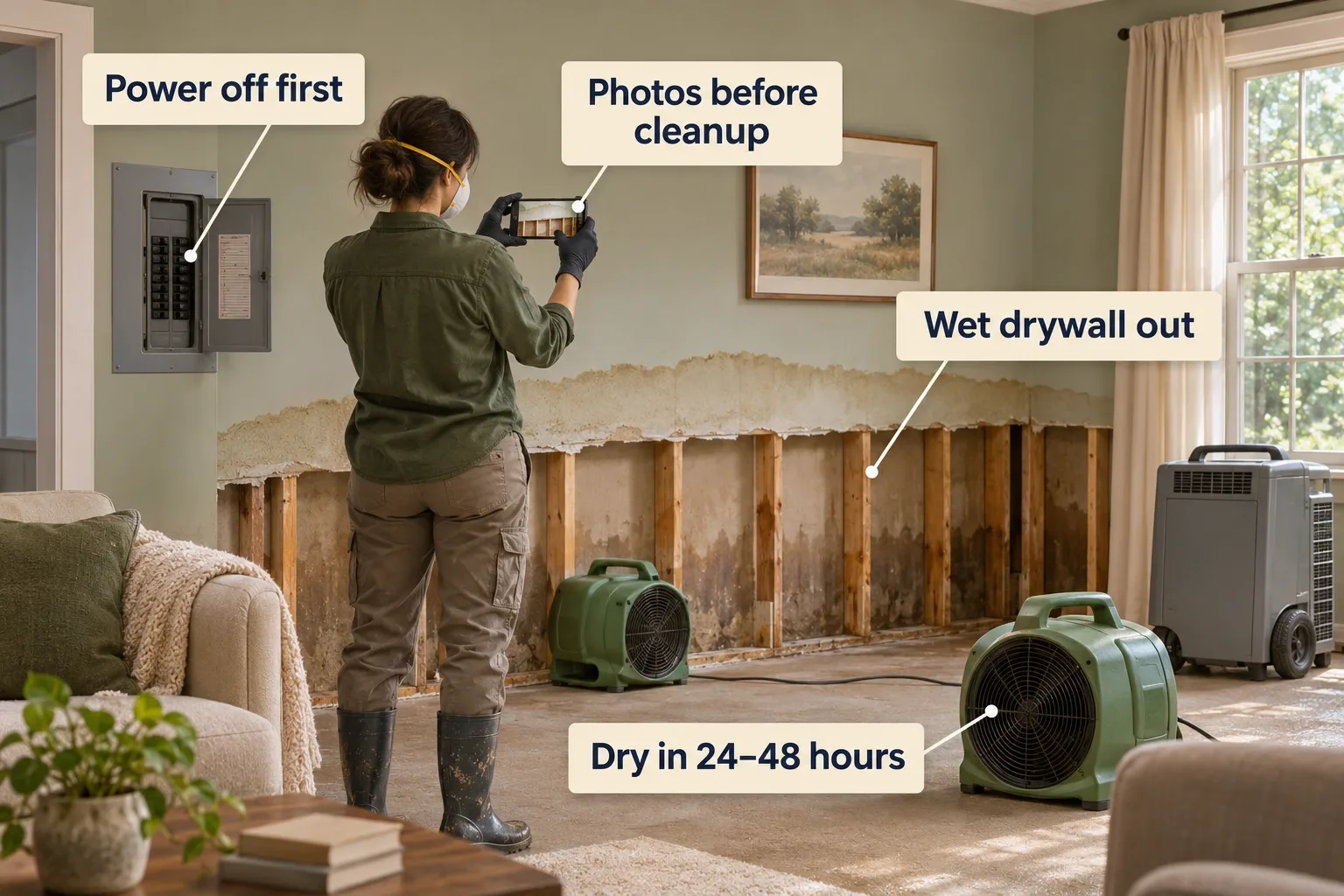
Public Health – Seattle & King County says to turn off utilities before going back in and never touch electrical equipment while standing in water. Photograph all damage before you clean or throw anything away. Then pump out water, open windows and start drying: mold can grow within 24 to 48 hours. Wear an N95 mask, gloves and goggles, and throw away wet drywall and soaked carpet.
Before you go back in
- Don't enter if the foundation has shifted or the building looks unsafe. Buildings must be declared safe first.
- Turn off utilities before re-entering. If the panel is in water, call your utility to disconnect power; don't touch it.
- Avoid flood water. It can carry an electrical charge, sewage and chemicals. Wash hands and clothes after contact.
- Wear protection: sturdy shoes, an N95 mask, gloves and goggles; carry a flashlight.
- Photograph everything, including the water line on the walls and serial numbers of appliances, before you clean or repair.
Cleaning up
- Pump out water after flood waters go down, and open windows and doors.
- Dry everything within 24 to 48 hours if you can; after that, assume mold. Costs: mold removal after a flood.
- Remove wet drywall; damaged sections can be replaced with new material once the framing is dry.
- Clean siding with a non-abrasive household detergent and rinse well.
- Homes built before 1978 may have lead paint; avoid sanding or scraping without precautions. See lead paint rules.
- Have a professional dry and inspect appliance motors before you use them again (Seattle Public Utilities).
- Sewage came in? That is a sewer backup issue too: sewer backup insurance.
What to keep and what to throw away
| Item | Public Health advice |
|---|---|
| Wet drywall | Throw away |
| Wall-to-wall carpet and pad soaked by flood water | Throw away |
| Small area rugs | Can be professionally cleaned and dried |
| Food and garden produce that touched flood water | Throw away |
| Food in sealed containers | Can be used if washed before opening |
Photograph items before they go to the curb; your adjuster may ask for proof. Insurance: flood insurance in Washington.
Private wells and septic systems
- Flooded well: use only bottled, boiled (rolling boil for 1 minute) or treated water, including for brushing teeth and washing hands, until the well is disinfected and tested.
- Flooded septic system: don't use it during a flood. After the water goes down, have an on-site sewage system maintainer check it, and disinfect it. Replacement costs: septic system replacement.
Frequently asked questions
What should I do first after a flood in my house?
Make sure the building is safe, turn off utilities, and photograph the damage before cleaning. Then pump out water and start drying.
How soon does mold grow after a flood?
Public Health – Seattle & King County says mold can grow within 24 to 48 hours after a flood.
Do I have to throw away drywall after a flood?
Public Health advises throwing away any drywall that is wet from flood water. Damaged sections can be replaced once the framing is dry.
Is my well water safe after a flood?
Not until it is disinfected and tested. Until then use bottled, boiled (rolling boil for 1 minute) or treated water.
Can I use my septic system after a flood?
Don't use it during the flood. Afterward, have an on-site sewage system maintainer check it and disinfect it.
Sources
- Public Health – Seattle & King County — How to clean a house after a flood
- Public Health – Seattle & King County — Safety precautions after a disaster
- Public Health Insider — Safety steps before entering a flooded building
- King County — Flood recovery
- Seattle Public Utilities — Side sewer backups
Sources accessed November 26, 2026.
This guide summarizes public health guidance. See our disclosure and disclaimer.