Landslide or sliding slope in Washington:
insurance, warning signs and who pays
DOES HOME INSURANCE COVER LANDSLIDE DAMAGE?
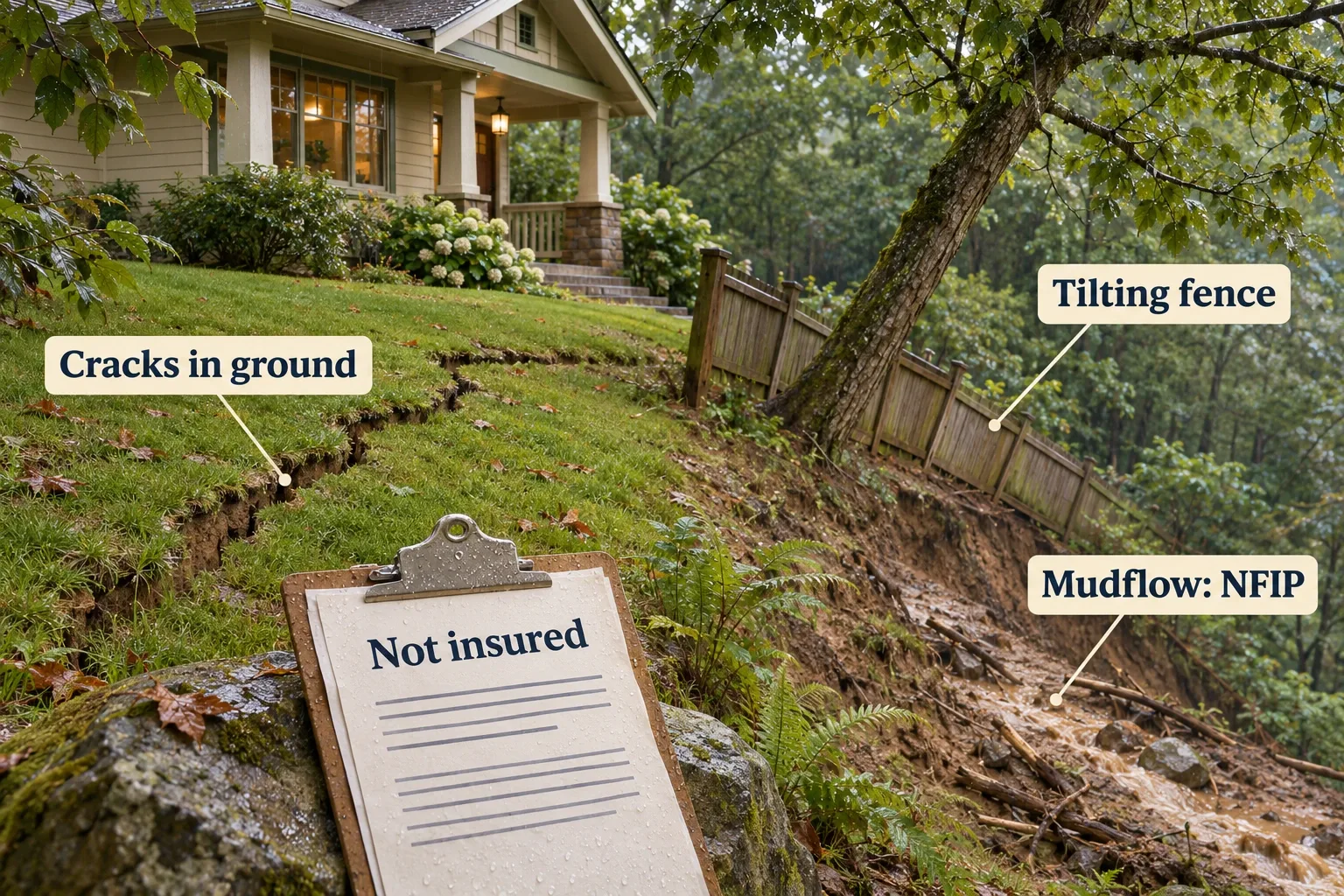
The Washington Department of Natural Resources says landslide damage is almost never covered by insurance. The Insurance Commissioner says a standard homeowner policy does not cover land movement caused by rain runoff, snowmelt, flooding or earthquakes. Mudflow is different: it is covered by NFIP flood insurance. If you see signs of active movement, leave the house and call 911 or your fire department.
What insurance covers
| Event | Standard homeowners | NFIP flood policy |
|---|---|---|
| Landslide, slump or earth movement | Excluded | Not covered |
| Mudflow (a river of liquid, flowing mud) | Excluded | Covered |
| Land movement caused by an earthquake | Excluded | Not covered; earthquake policies sometimes include it |
| A tree or debris from a slide hits the house | Check your policy | — |
More on flood policies: flood insurance in Washington. A fallen tree is a separate topic: neighbor's tree fell on your house.
Warning signs of landslide movement
DNR lists signs like these. Many show up after long, heavy rain:
- New cracks in the ground, foundation, walls, driveway or retaining walls.
- Soil moving away from the foundation; doors and windows that suddenly stick.
- Sagging or tight utility lines; broken or leaking water pipes.
- Tilting trees, fences or retaining walls.
- Sunken or broken road surfaces; new springs or wet areas on a slope.
To see mapped landslides near you, search your address on DNR's Washington Geologic Information Portal.
Who pays: you or the neighbor?
There is no simple rule. An American Bar Association review of landslide cases notes that the same slide can harm the uphill owner and the downhill owner, and that land movement is often excluded from an owner's own property coverage, while a claim against the neighbor who caused it can sometimes fall under that neighbor's liability coverage. Who pays depends on what caused the slide (for example, drainage or grading work) and on the policies involved.
- Write it down: dates, photos, and any drainage or digging work on either property.
- Tell your insurer and the neighbor in writing. Even a denied claim creates a record.
- Get a geotechnical engineer's report on the cause before you agree to pay for repairs.
- Talk to a lawyer if the damage is large. Small amounts: small claims court (the limit applies to any claim, not only contractors).
What to do
- If movement is active, evacuate and call your fire or police department (DNR).
- Report the damage to your county; in the December 2025 storms, landslides and mudslides were part of the federal disaster declaration. See help after a flood.
- Apply for property tax relief: the state lists mudslides among eligible causes. See destroyed property relief.
- Fix drainage first. DNR advises keeping water from downspouts and surface runoff away from slopes. Drain costs: French drain cost, retaining wall cost.
- Ask before regrading. Check with your city or county permit office before cutting into or filling a slope; the Department of Ecology advises against cutting into a steep slope.
Frequently asked questions
Does homeowners insurance cover landslides in Washington?
Almost never. Standard policies exclude earth movement. DNR says landslide damage is almost never covered by insurance.
Does flood insurance cover mudslides?
NFIP flood insurance covers mudflow, a river of liquid, flowing mud. It does not cover landslides or slow earth movement.
What are the signs of a landslide on my property?
New cracks in the ground or foundation, sticking doors and windows, tilting trees or walls, sagging utility lines and broken water pipes.
Who is responsible if my neighbor's slope slides onto my property?
It depends on the cause and the insurance policies involved. Document everything, get an engineer's report, and get legal advice for large losses.
Can I get a property tax reduction after a landslide?
Yes, if the property was destroyed in part or lost value in a declared disaster. Washington lists mudslides among eligible causes; apply within three years.
Sources
- Washington DNR — Homeowner's Guide to Landslides
- Washington Emergency Management Division — Rain brings increased risk of landslides
- Washington Emergency Management Division — Landslides
- American Bar Association — Landslide liability issues
- Washington Department of Revenue — Destroyed property FAQ
- Washington Department of Ecology — Coastal landslides
Sources accessed November 26, 2026.
This guide summarizes public information about landslides. It is not legal or engineering advice. See our disclosure and disclaimer.