Rebuilding after a flood in King County:
permits and the 50% rule
CAN I JUST REPAIR MY FLOODED HOUSE THE WAY IT WAS?
In a mapped flood zone, FEMA rules require your city or county to decide whether a damaged home is "substantially damaged": repairs costing 50% or more of the building's market value before the flood, land not counted. A substantially damaged home must be brought up to current floodplain rules, which often means elevating it. NFIP flood insurance includes up to $30,000 of Increased Cost of Compliance coverage to help pay for that.
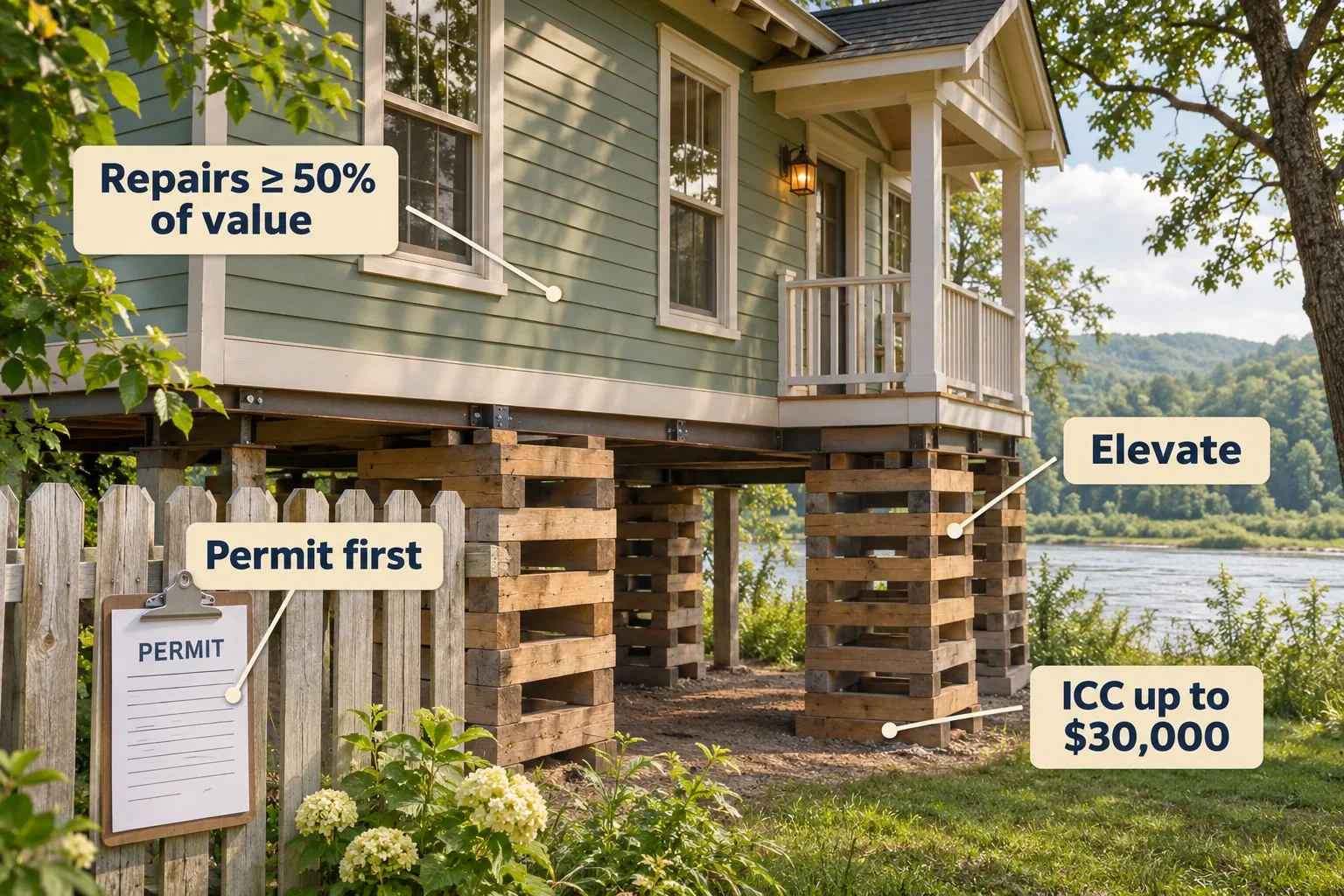
The 50% rule (substantial damage)
| Example | Amount |
|---|---|
| Home's market value before the flood (building only) | $200,000 |
| Estimated cost to repair it to its pre-flood condition | $120,000 |
| Repair cost as a share of value | 60% |
| Result | Substantially damaged |
- Who decides: your local building official or floodplain manager, not FEMA.
- Where it applies: buildings in a Special Flood Hazard Area, the mapped 100-year floodplain. Check yours: flood zone check in King County.
- What follows: the building must meet current floodplain rules. FEMA says owners who rebuild may need to elevate or make other changes, and in rare cases a community may offer a buyout.
- Under 50%: you still need the usual permits, but the elevation rule for substantial damage does not apply.
Permits you may need
King County says all development in a mapped floodplain needs a permit. After a flood, depending on the damage and location, King County lists:
- A floodplain development permit if the property is in a special flood hazard area (through the Department of Local Services, Permitting, for unincorporated areas).
- The usual building, electrical and plumbing permits for the repairs. See who pulls the permit.
- For a septic system that was flooded, a check by an on-site sewage system maintainer.
Inside Seattle, Kent, Renton or another city, the city runs its own floodplain rules: permits in Kent, Auburn and Renton.
Money to elevate or rebuild
| Source | Amount | Condition |
|---|---|---|
| NFIP Increased Cost of Compliance | Up to $30,000 | NFIP policy and a substantial or repetitive damage letter from your community |
| SBA disaster loan mitigation | Up to 20% more than verified damage | Federal disaster declaration and an approved SBA loan |
| King County Flood Control District home elevation program | Varies | Currently only for the Snoqualmie River basin |
King County says recent home elevation projects have cost about $250,000, so $30,000 of ICC coverage usually pays only part of the job. Your ICC claim is adjusted separately from the main flood claim.
Steps after a flood
- Call before you rebuild. Ask the permit office whether your home needs a substantial damage determination.
- Get a written repair estimate from a registered contractor; the official compares it with the building's value.
- Ask for the determination letter. You need it for an ICC claim.
- Tell your flood insurer and file the ICC claim.
- Apply for property tax relief: destroyed property relief.
Frequently asked questions
What is substantial damage after a flood?
Damage where repairing the building to its pre-flood condition would cost 50% or more of its market value before the damage, not counting land.
Who decides if my home is substantially damaged?
Your local building official or floodplain manager. FEMA does not make the determination.
Do I have to elevate my house after a flood?
If the home is in a mapped flood zone and substantially damaged, it must meet current floodplain rules, which often means elevating it.
How much does flood insurance pay to elevate a house?
NFIP Increased Cost of Compliance coverage pays up to $30,000 when your community declares the building substantially or repetitively damaged.
How much does it cost to elevate a house in King County?
King County says recent home elevation projects have cost about $250,000.
Sources
- FEMA — Understanding Substantial Damage Determinations
- FEMA — What does "substantial damage" mean?
- FloodSmart.gov — Increased Cost of Compliance
- King County — Home elevation program
- King County — Floodplain maps and development permits
- Washington Department of Ecology — Substantial Damage Guidance (2022)
Sources accessed November 26, 2026.
This guide summarizes floodplain rules. Your local permit office makes the decisions. See our disclosure and disclaimer.