Oil tank decommissioning cost in Seattle (2026):
fill in place, removal and permits
HOW MUCH DOES OIL TANK DECOMMISSIONING COST IN SEATTLE?
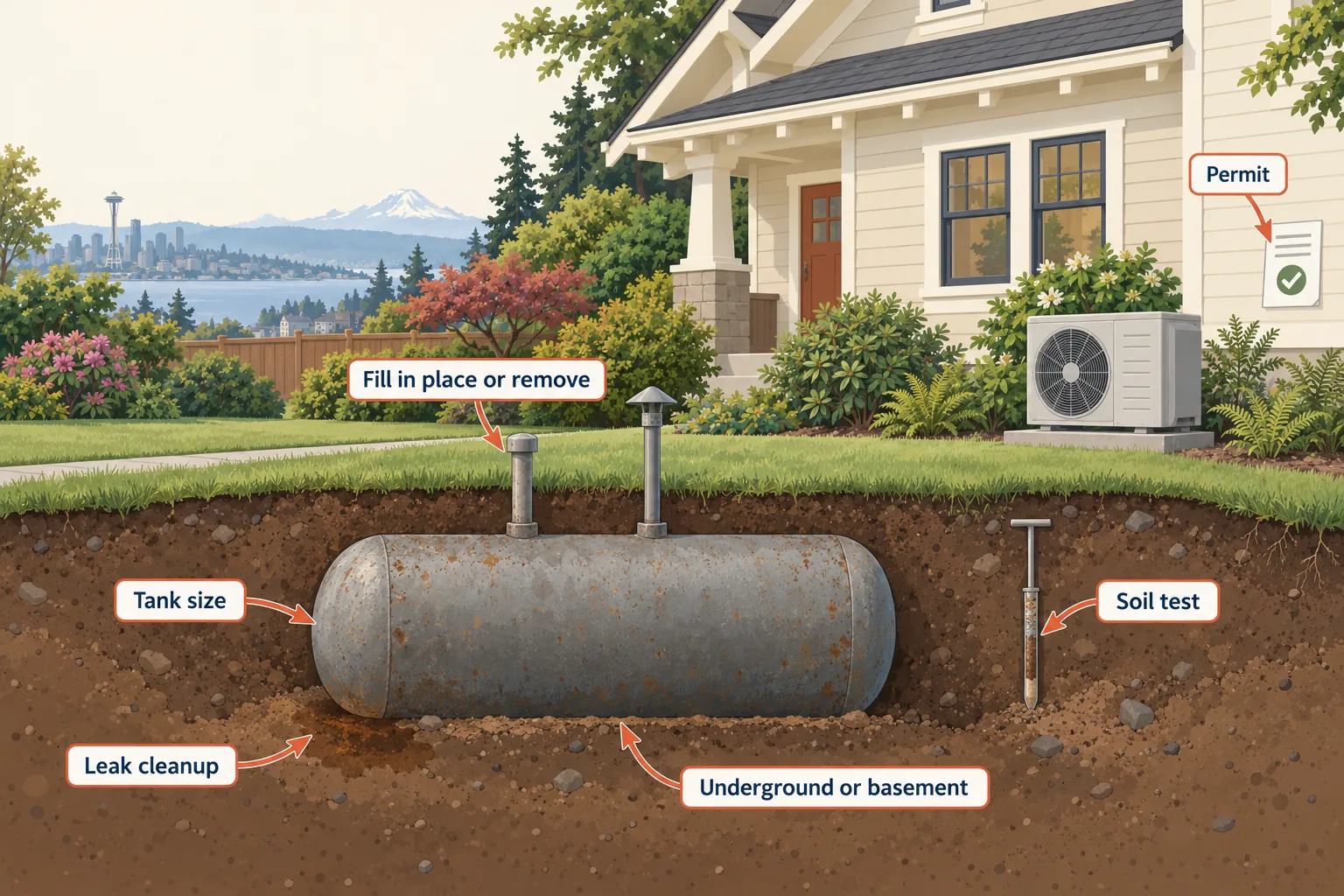
HomeAdvisor puts decommissioning a buried heating oil tank, whether it's filled in place or dug up, at about $1,000 to $3,000. In Seattle you also pay the Fire Department's $184 permit for each tank, and the work must be done or supervised by an ICC-certified decommissioner. A tank that has leaked costs more: HomeAdvisor lists cleanup at $500 to $10,000.
Why Seattle homeowners decommission oil tanks
- Many homes still have one. The City estimates 8,000 to 10,000 Seattle homes still heat with oil, and it has a goal of moving all of them off oil by 2030. That's a City goal, not a law.
- The Fire Code requires it for unused tanks. Seattle Fire Department rules say a tank out of service for a year or more must be decommissioned.
- Old tanks leak. The City says these tanks are well past their useful life of 20 to 30 years, and that cleanup of an oil leak can exceed $10,000 and may not be covered by homeowner's insurance.
- Switching to a heat pump. Seattle's Clean Heat rebate for replacing oil heat requires decommissioning the tank under Fire Department rules.
Fill in place or remove: the two options
| Abandon (fill) in place | Remove | |
|---|---|---|
| What happens | Oil is pumped out, the tank is cleaned and triple rinsed, then filled with an inert material such as sand, concrete slurry or foam. The fill pipe is cut and capped. | The tank is dug out of the ground and the hole is filled in. |
| Allowed in Seattle? | Yes | Yes |
| When it's not the right choice | The Fire Department says a tank suspected of leaking should be removed rather than abandoned in place. | — |
Oil tank decommissioning cost
| Item | Reported cost |
|---|---|
| Underground tank removal | $1,000–$3,000 |
| Abandonment (fill in place) | $1,000–$3,000+ |
| Basement tank | $1,000–$3,000+, plus $500–$1,000 to get it out |
| Above-ground tank | $300–$1,000 |
| Soil test, underground tank | about $500 |
| Contamination cleanup | $500–$10,000 |
| Tank size | Underground or basement | Above ground |
|---|---|---|
| 550 gallons or less | $1,000–$1,500 | $300–$1,000 |
| 1,000 gallons | $1,300–$1,800 | $1,000–$1,700 |
Seattle Fire Department permit
- A permit is required to remove, abandon or otherwise take a heating oil tank out of service (Seattle Fire Code 105.5.20). Each underground tank needs its own permit, code 6103.
- The fee is $184 per tank for homes with one to four units and tanks under 1,100 gallons.
- Get it before the work. Work can't start until the application is stamped "Approved to Proceed," and the Fire Department doesn't issue a permit after the work is done.
- Who does the work: an International Code Council (ICC) certified underground storage tank decommissioner must do or directly supervise the job and be on site the whole time. The certificate must be on file with the Fire Department.
- Paperwork you keep: the decommissioner files a report with the Fire Department and gives you a copy within 30 days. Keep it with the approved permit, receipts and photos.
- Soil samples aren't required by the Fire Code, but other laws may apply if a leak is found.
Example: a 550-gallon buried tank filled in place
| Line | Amount |
|---|---|
| Decommissioning, 550 gallons or less, underground (HomeAdvisor) | $1,000–$1,500 |
| Seattle Fire Department permit | $184 |
| Optional soil test (HomeAdvisor, underground) | about $500 |
| Total without soil test | $1,184–$1,684 |
| Total with soil test | $1,684–$2,184 |
If you're replacing oil heat with a heat pump at the same time, see heat pump installation cost in Seattle and heat pump rebates in Washington. Seattle's Clean Heat program offers a $2,000 instant rebate for switching from oil, plus a $4,000 bonus for households at 81–150% of area median income on installs completed by May 30, 2027. The City's Office of Housing offers income-eligible households a free conversion that includes tank decommissioning.
If the tank has leaked
- Remove it. The Fire Department says a tank suspected of leaking should come out of the ground rather than be filled in place.
- Reporting: the Washington Department of Ecology has reporting requirements based on how much contamination is found. Its Northwest Regional Office is at (206) 594-0000.
- State help (PLIA): the Pollution Liability Insurance Agency's Heating Oil Loan and Grant program offers up to $75,000 to a qualified tank owner, including a cleanup grant of up to $60,000 per tank. You must own the property, and PLIA must pre-approve all work before it begins. The fall/winter 2026 application window is November 2 to December 17, 2026.
- The old PLIA insurance has ended. PLIA's Heating Oil Insurance Program coverage expired on July 1, 2025. Some older articles still describe it as available.
Buying or selling a house with an old oil tank
- Ask the seller for the Fire Department permit stamped "Approved to Proceed" and the decommissioner's report. Those are the records the City tells owners to keep.
- A tank filled without a permit can't simply be permitted later: the Fire Department doesn't issue a permit after the work is done.
- If there are no records, ask your inspector about the tank and about soil testing before you close.
Before you sign
- See the decommissioner's ICC underground storage tank certificate.
- Ask whether the quote covers the $184 permit, pumping and disposing of the oil, cleaning, fill material and capping the pipes.
- Ask what happens and what it costs if a leak is found partway through.
- If you may apply to PLIA, get pre-approval first; PLIA won't fund work done before approval.
- Look the contractor up on L&I's Verify a Contractor tool.
Frequently asked questions
How much does oil tank decommissioning cost in Seattle?
HomeAdvisor puts decommissioning a buried oil tank at about $1,000 to $3,000, whether it's filled in place or removed. Seattle adds a $184 Fire Department permit per tank. A small tank of 550 gallons or less runs about $1,000 to $1,500 before the permit.
Do I need a permit to decommission an oil tank in Seattle?
Yes. The Seattle Fire Department requires a permit before removing or abandoning a heating oil tank, and it doesn't issue permits after the work is done. The fee is $184 per tank for homes with one to four units.
Is it cheaper to fill an oil tank in place or remove it?
HomeAdvisor gives similar ranges for both: about $1,000 to $3,000 for an underground tank. If the tank may have leaked, the Fire Department says it should be removed rather than filled in place.
Who pays to clean up a leaking oil tank in Washington?
The City says cleanup of an oil leak can exceed $10,000 and may not be covered by homeowner's insurance. The state's PLIA Heating Oil Loan and Grant program offers up to $75,000 to qualified tank owners, with work pre-approved by PLIA. Its older Heating Oil Insurance Program ended on July 1, 2025.
Do I have to remove an oil tank I no longer use?
Under the Seattle Fire Code, a tank out of service for a year or more must be decommissioned, either by filling it in place or removing it, with a permit.
Switching from oil heat? See heat pump installation cost in Seattle and mini split installation cost.
Sources
- Seattle Fire Department — Client Assistance Memo 5962, Decommissioning of Residential Heating Oil Tanks (updated March 2024)
- Seattle Fire Department — Permit 6103 application, residential heating oil tank decommissioning
- Seattle Office of Sustainability & Environment — Clean Heat Program and Seattle oil tank flyer
- City of Seattle Greenspace — The Hidden Risks Beneath Your Yard (November 5, 2025)
- HomeAdvisor — How Much Does Oil Tank Removal Cost? (2025)
- Washington Pollution Liability Insurance Agency — Heating Oil Loan and Grant Program
- Washington Pollution Liability Insurance Agency — Heating Oil Insurance Program (ended)
- Seattle City Light — Home energy solutions (Clean Heat rebates); L&I — Hiring a contractor
All sources accessed October 24, 2026, except Clean Heat rebate amounts, checked October 16, 2026.
This guide summarizes published cost estimates and City and State rules. It is not legal or environmental advice. Get written quotes from an ICC-certified decommissioner and confirm permit rules with the Seattle Fire Department. See our disclosure and disclaimer.