EV charger installation cost in Seattle (2026):
Level 1 vs Level 2, permits and incentives
HOW MUCH DOES EV CHARGER INSTALLATION COST IN SEATTLE?
Angi puts a typical EV charger installation in Seattle at $656 to $1,179, with an average of $916 (July 2026). A Level 2 (240-volt) charger runs $780 to $2,230 in Seattle. A panel upgrade, if needed, adds more. Kiplinger reports the federal EV charger tax credit ended for installs completed after June 30, 2026.
Level 1 vs Level 2 charger cost
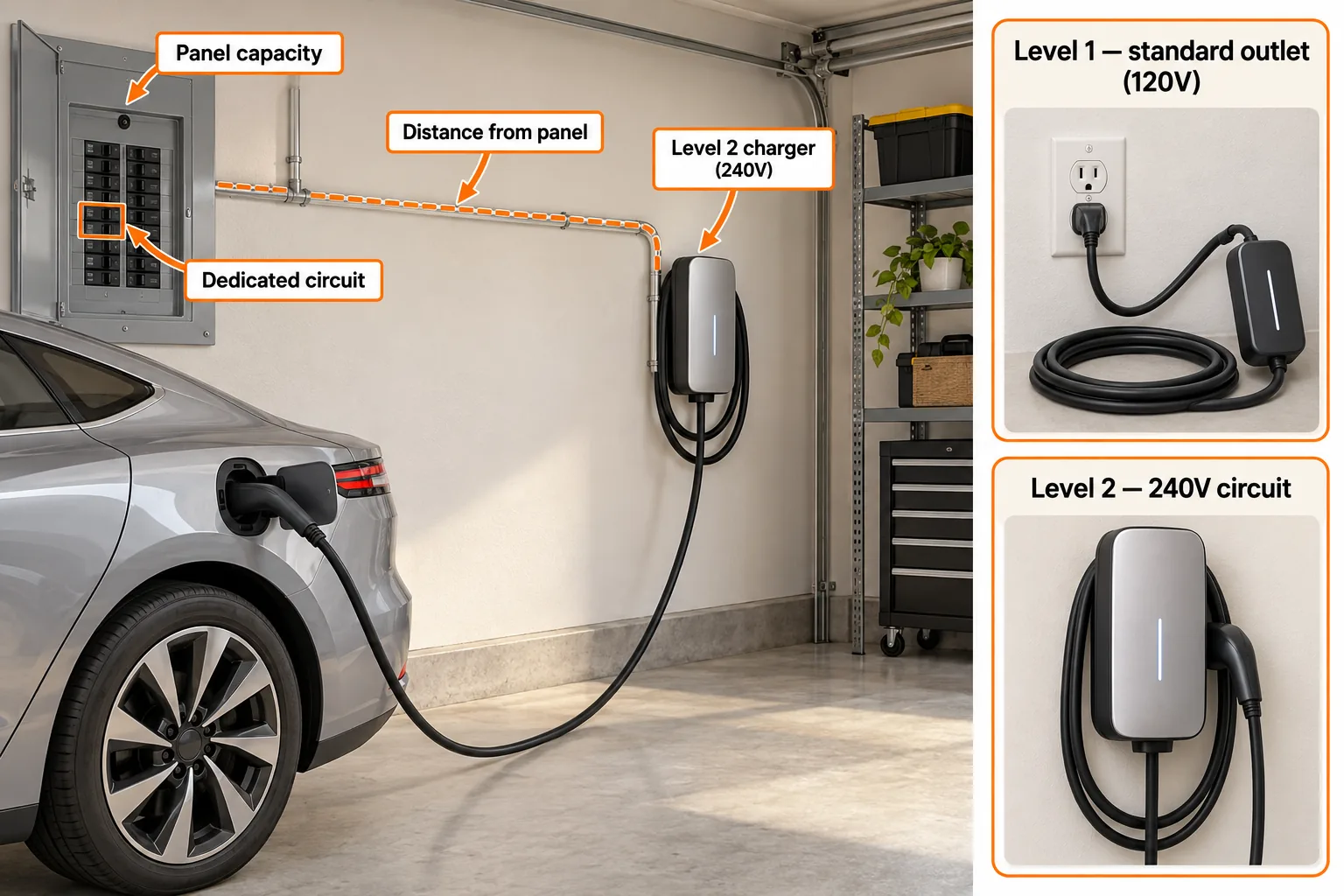
| Charger | Seattle (Angi) | U.S. (Angi) |
|---|---|---|
| Level 1 (110–120 volts, standard outlet) | $335–$670 | $300–$600 |
| Level 2 (220–240 volts) | $780–$2,230 | $700–$2,000 |
Angi says complex jobs that include panel work can approach $1,786 in Seattle, above the typical range.
Does your panel have room?
A Level 2 charger runs on 220 to 240 volts, so ask your electrician whether your panel can supply it. Angi budgets $800 to $2,000 for a panel upgrade when one is needed; for Seattle panel prices, permits and City Light steps, see our electrical panel upgrade cost guide.
Seattle City Light notes that you may already have enough capacity for EV charging. A load calculation by your electrician shows whether you need an upgrade before you pay for one.
Seattle permit for an EV charger
- SDCI issues electrical permits in Seattle and requires one "any time electrical wiring is installed, altered, extended, or connected," which includes a new charger circuit.
- Owners may do their own electrical work only in a home they own and live in. Most electrical permits need cover, service and final inspections.
- Angi says most EV charger installation permits cost $100 to $200.
Rebates and tax credits
- Federal tax credit: the credit covered 30% of a home charger's cost, up to $1,000, but only in eligible low-income or non-urban census tracts. Kiplinger reports it was eliminated for installations completed after June 30, 2026.
- Seattle City Light: we didn't find a current rebate for single-family home chargers on City Light's website; its EV programs we checked focus on public and affordable multifamily charging. Ask your electrician whether any utility discount applies to your charger.
Example: Level 2 charger with Seattle sales tax
| Step | Amount |
|---|---|
| Level 2 charger installed in Seattle (Angi) | $780–$2,230 |
| With 10.55% Seattle sales tax | $862–$2,465 |
Before you sign
- Ask for a load calculation, the circuit size, the wire run from the panel and whether the permit is included.
- Washington contractors collect sales tax "on the gross contract price," labor included (Department of Revenue).
- Look the electrician up on L&I's Verify a Contractor tool. For jobs of $1,000 or more on a home, the contractor must give you a written disclosure statement before work starts (RCW 18.27.114).
Frequently asked questions
How much does EV charger installation cost in Seattle?
Angi puts a typical Seattle installation at $656 to $1,179, with an average of $916 (July 2026). A Level 2 charger runs $780 to $2,230 in Seattle. Seattle's 10.55% sales tax applies to the whole contract.
How much does a Level 2 charger cost to install?
Angi lists $780 to $2,230 in Seattle and $700 to $2,000 nationally, unit and installation included.
Do I need a panel upgrade for an EV charger?
Not always. Seattle City Light says you may already have enough capacity for EV charging. If you need one, Angi budgets $800 to $2,000.
Do I need a permit for an EV charger in Seattle?
Yes, for a new circuit. SDCI requires an electrical permit whenever wiring is installed, altered, extended or connected. Angi says most EV charger permits cost $100 to $200.
Is there still a tax credit for home EV chargers?
Not for new installs. Kiplinger reports the federal credit ended for installations completed after June 30, 2026. It covered 30% up to $1,000, only in eligible census tracts.
Sources
- Angi — EV charger installation cost in Seattle, WA (updated Jul 29, 2026)
- Seattle SDCI — Electrical Permit
- Seattle City Light — Capacity, Load and Electrical Service and Transportation Electrification
- IRS — Alternative Fuel Vehicle Refueling Property Credit
- Kiplinger — EV charger tax credit deadline (May 23, 2026)
- WA Department of Revenue; RCW 18.27.114; L&I — Hiring a contractor
All sources accessed October 14, 2026.
These figures are estimates compiled from the published sources above. They are not quotes and can't account for your home or your electrician. Electrical work is dangerous; hire a licensed electrician. This is not tax advice. Get written estimates from licensed, bonded and insured contractors before deciding. See our disclosure and disclaimer.