Construction liens on your home in Washington (2026):
deadlines, lien releases and how to protect yourself
CAN A CONTRACTOR PUT A LIEN ON MY HOUSE IN WASHINGTON?
Yes. Under chapter 60.04 RCW, a contractor, subcontractor or supplier who isn't paid can record a lien on the property they worked on, within 90 days after they stopped working. The lien lapses after eight months unless they sue to enforce it. L&I warns that unpaid subcontractors and suppliers "can look to your property for payment, even if you have paid your contractor in full."
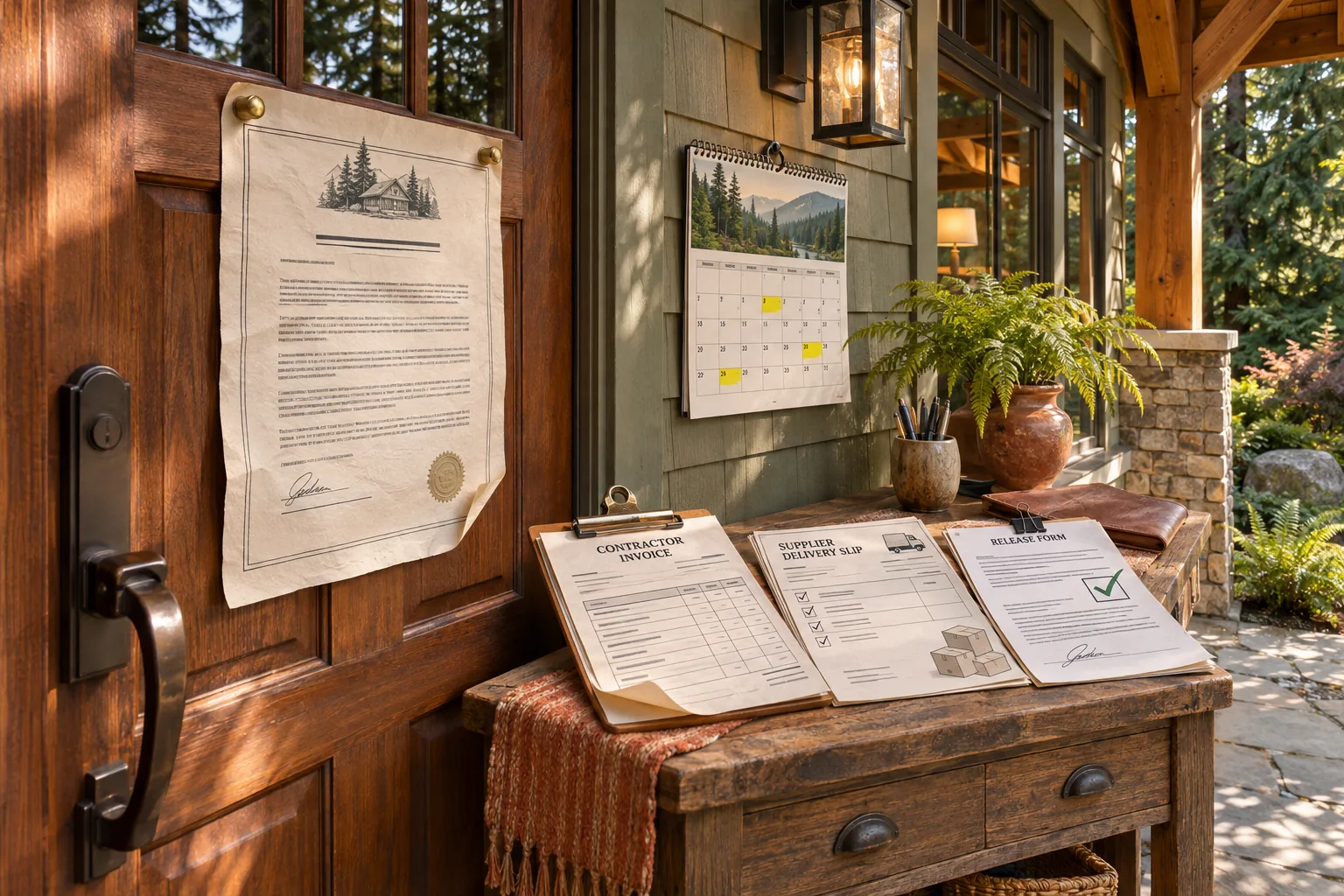
Lien deadlines in Washington
| Step | Deadline | Law |
|---|---|---|
| Contractor gives you the disclosure statement (jobs of $1,000 or more) | Before work starts | RCW 18.27.114 |
| Supplier or sub that didn't contract with you sends a notice to owner | Covers only what it supplied in the 60 days before the notice | RCW 60.04.031 |
| Claimant records the lien with the county | Within 90 days after it stopped furnishing labor or materials | RCW 60.04.091 |
| Claimant sends you a copy of the recorded lien | Within 14 days after recording | RCW 60.04.091 |
| Claimant sues to enforce the lien | Within 8 months after recording, and serves you within 90 days of filing | RCW 60.04.141 |
- No disclosure statement, no lien. Under RCW 18.27.114, a contractor who had to give you the disclosure statement can't bring a lien claim unless it proves you received it.
- A missed deadline ends the lien. RCW 60.04.091 makes the 90-day recording period a limit: a lien recorded later can't be enforced. RCW 60.04.141 says a lien doesn't bind the property for more than eight months after recording unless a suit is filed.
Who can put a lien on your home
| Who | Owner-occupied home: repair or remodel |
|---|---|
| Contractor you hired directly | Lien for the full contract amount, no extra notice needed |
| Subcontractor or supplier hired by your contractor | Must send you a written notice. Its lien is limited to what you still owed your contractor when you received the notice |
| Laborer (wages only) | No notice needed |
The second row is the one that protects homeowners: on an owner-occupied home, a subcontractor's or supplier's lien can only be paid from money you hadn't yet paid the contractor when its notice reached you. A notice sent by certified or registered mail counts as received three days after mailing, not counting weekends and holidays.
How to protect yourself before you pay
- Get the disclosure statement. For jobs of $1,000 or more on a home, the contractor must give it to you before starting work.
- Keep every notice. If a supplier or subcontractor sends you a notice to owner, don't pay the contractor the rest until you know that party has been paid.
- Ask for lien releases. Before the final payment, L&I advises asking each contractor and material supplier for a completed lien release form.
- Pay jointly. L&I suggests making checks payable jointly to the contractor and the subcontractor or supplier.
- Hold back until you're satisfied. L&I notes owners may withhold a percentage of the contract until the work is done to their satisfaction.
- Check the contractor. Look the contractor up on L&I's Verify a Contractor tool, and keep the bond details: see contractor bond claims.
If a lien is wrong or too high
Under RCW 60.04.081, an owner can ask the superior court in the county where the property is to release a lien that is "frivolous and made without reasonable cause, or clearly excessive."
- The lien claimant must appear at a hearing set 6 to 15 days after it is served.
- If the court finds the lien frivolous, it releases it; if clearly excessive, it reduces it. The claimant pays your costs and reasonable attorneys' fees.
- If the court finds the lien is not frivolous, you pay the claimant's costs and attorneys' fees. That's a real risk, so get legal advice first.
Frequently asked questions
How long does a contractor have to file a lien in Washington?
90 days after the contractor stopped furnishing labor or materials, under RCW 60.04.091. The lien is recorded in the county where the property is, and a copy must go to the owner within 14 days.
How long does a lien last in Washington?
Eight calendar months after it is recorded, unless the claimant files a lawsuit to enforce it in that time and serves the owner within 90 days of filing (RCW 60.04.141).
Can a subcontractor put a lien on my house if I paid my contractor?
On an owner-occupied single-family home being repaired or remodeled, a subcontractor or supplier who didn't contract with you must notify you in writing, and its lien is limited to what you still owed your contractor when you received the notice (RCW 60.04.031).
Can a contractor file a lien without a disclosure statement?
No, if one was required. For residential jobs of $1,000 or more, RCW 18.27.114 says a contractor can't bring a lien claim unless it proves the customer received the disclosure statement before work started.
What can I do about a frivolous lien?
Ask the superior court to release it under RCW 60.04.081. The court holds a hearing 6 to 15 days after service; the losing side pays the other side's costs and reasonable attorneys' fees.
Sources
- RCW 60.04.031 — Notices to owner
- RCW 60.04.091 — Recording of lien and RCW 60.04.141 — Duration of lien
- RCW 60.04.081 — Frivolous claim of lien
- RCW 18.27.114 — Disclosure statement
- L&I — Facts About Construction Liens, F625-017-000 (January 2026)
All sources accessed November 8, 2026.
This guide summarizes Washington law and L&I information. It is not legal advice. If a lien is recorded on your home, talk to a Washington attorney. See our disclosure and disclaimer.